DichTech Präzision Composites manufactures precision CNC-machined components from engineering and high-performance plastics. Material selection, CAD/CAM engineering, machining and quality assurance — all from a single source.
Machining is never viewed in isolation. Material, intermediate product and machining strategy are coordinated from the first drawing — for cost-effective, functionally reliable components.
Complex contours, pockets, hole patterns and free-form geometries on 5-axis milling centres — in unfilled and fibre-reinforced plastics.
Learn more →Precise, rotationally symmetrical parts — bushings, seals, valve components — with turning and milling combined in one setup.
Learn more →Functional prototypes machined directly from your CAD model — for testing, assembly trials and design validation before series.
Learn more →A complete system range in fibre reinforced plastics, laminated densified wood and laminated pressboard — sheets, profiles, wound cones, fasteners and moulded parts.
Learn more →From easily machinable PEEK, PPS and PEI to demanding PE, PA and PTFE — we recommend the right polymer for your application.
Learn more →Precise CNC programmes, tool and process planning, clamping-fixture design and programme simulation for stable, repeatable production.
Batch traceability from raw material to finished part. Tactile CMM, optical measurement, microscope inspection and functional tests on request.
Batch traceability is a fundamental part of our production. Documentation covers the entire process chain, ensuring transparency and reliability at every stage.
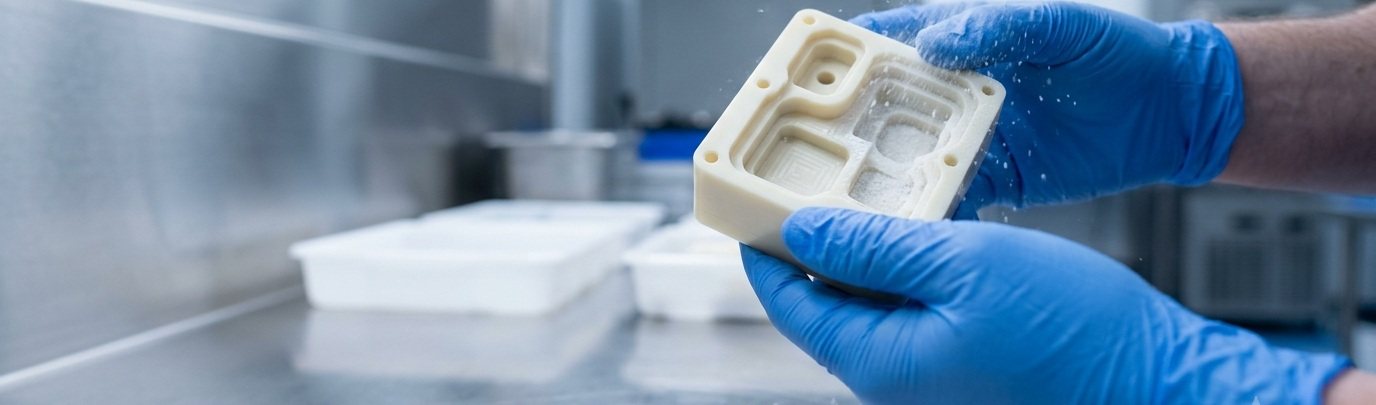
Many machining applications place high demands on documentation, quality assurance and standard-compliant processes. Our structured quality management system meets them.
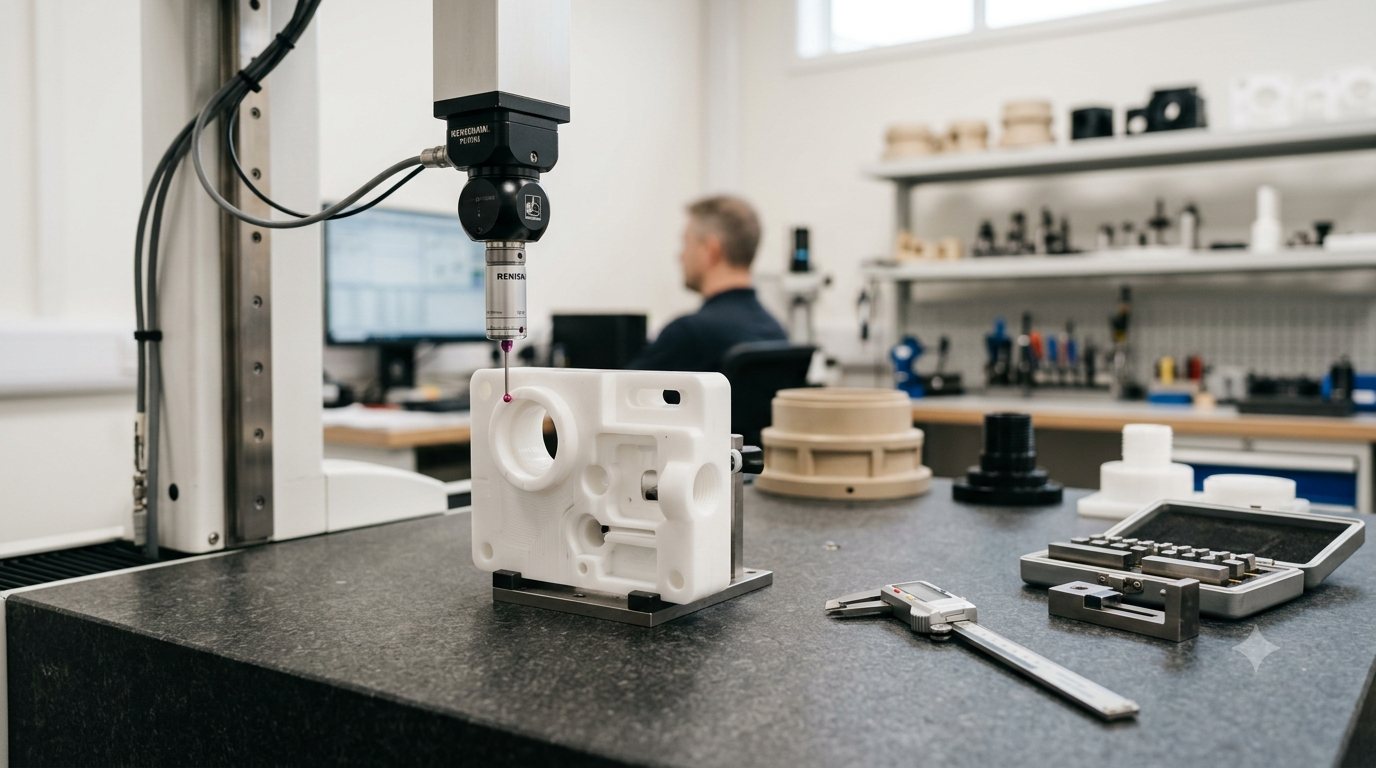
Thanks to a deep vertical range of manufacture, we deliver solutions from development to series products across sectors.
Send us your part data — we'll come back with material recommendation and quotation.
Precision manufacture of complex milled components from unfilled and fibre-reinforced engineering plastics — with high repeatability and consistent machining quality.
In CNC milling, material is removed by rotating tools along precisely defined machining paths — ideal for components with complex contours, pockets, hole patterns, grooves, flat surfaces and free-form geometries.
Milling plastics requires a deep understanding of the material: thermal expansion, stiffness, chip formation and springback vary significantly between polymers and directly influence achievable tolerances. We therefore consider geometry, material, fibre orientation, tolerance requirements and the application environment together.
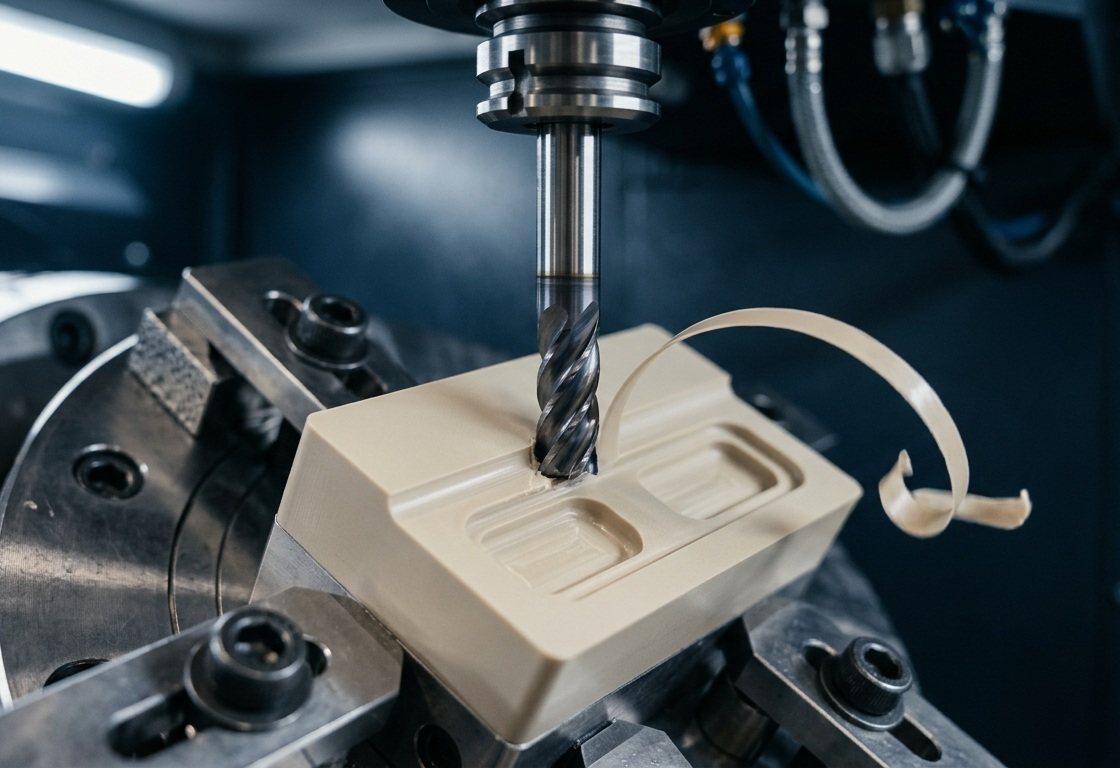
Housings, covers, brackets, insulation components, fixtures and textured functional surfaces — including custom parts with tight tolerances and specified surface finishes.
Precise machining of complex geometries in engineering and high-performance plastics — in few setups, with high positional accuracy.
Intelligent clamping solutions and automated processes lay the foundation for cost-effective small-batch and series production.
Tailored strategies for carbon- and glass-fibre reinforced polymers: correct tools, parameters and clamping for abrasive composites.
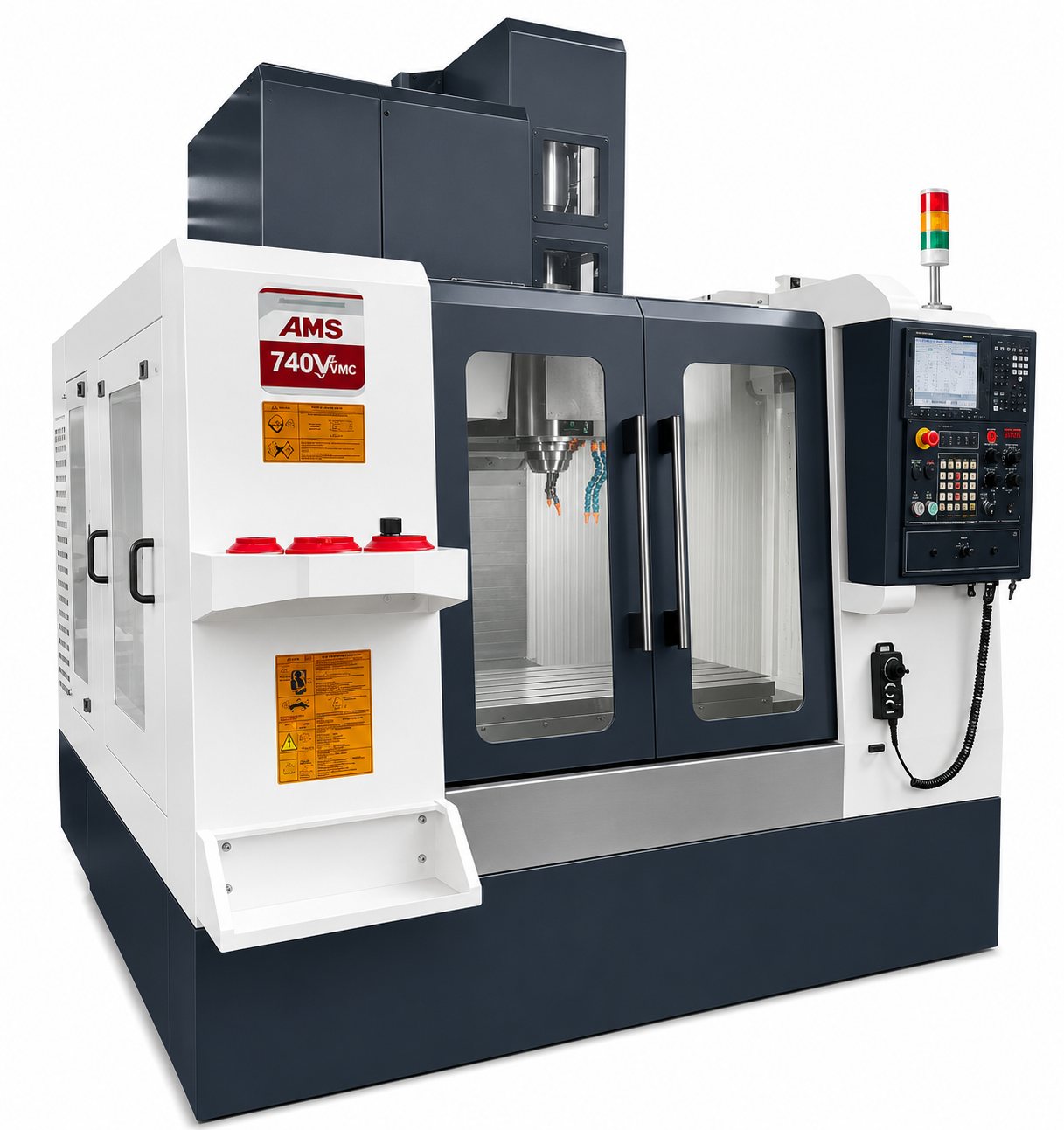
Vertical machining centre for precision milling of engineering plastics.
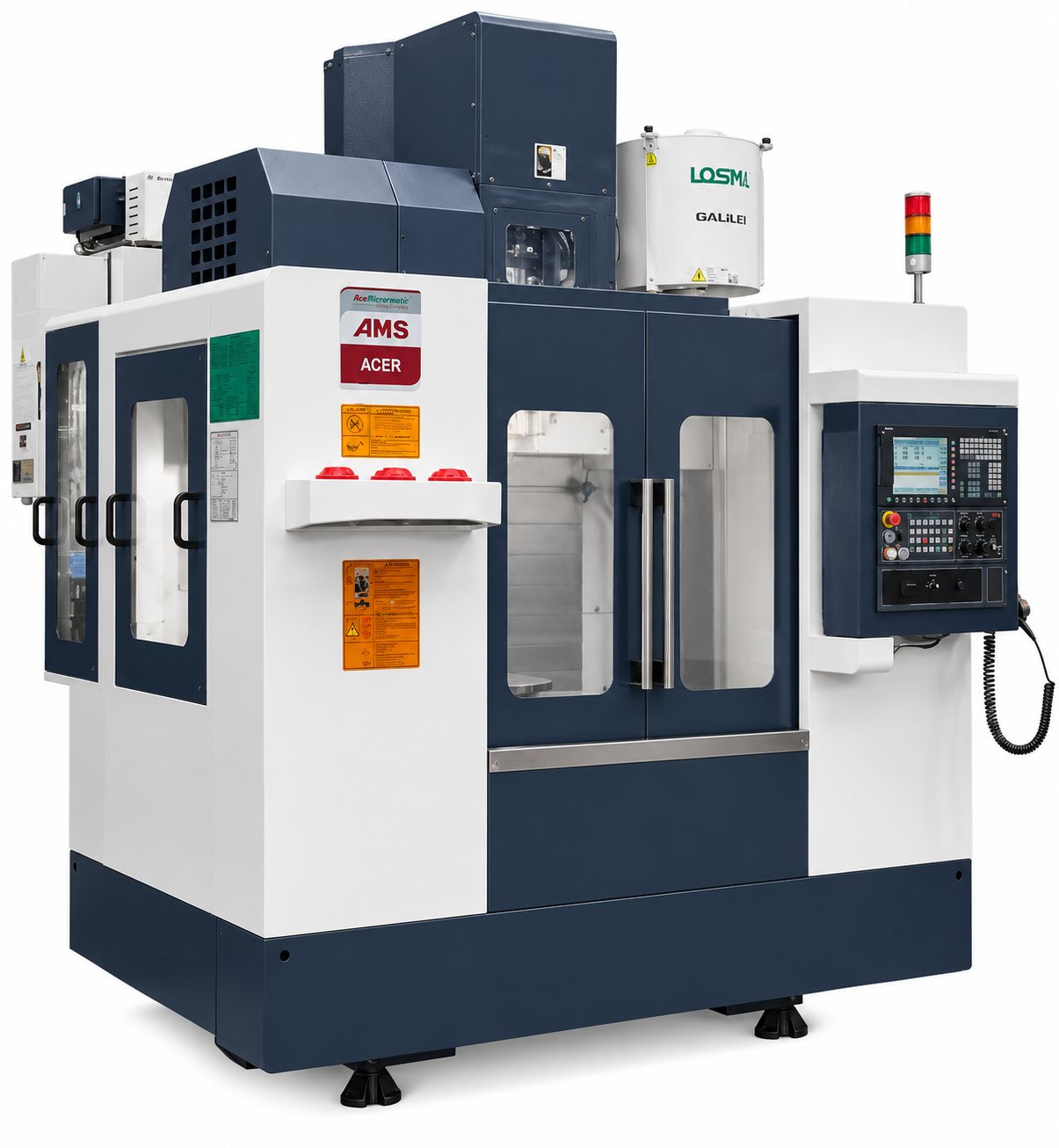
Rigid VMC platform for tight-tolerance component and fixture work.
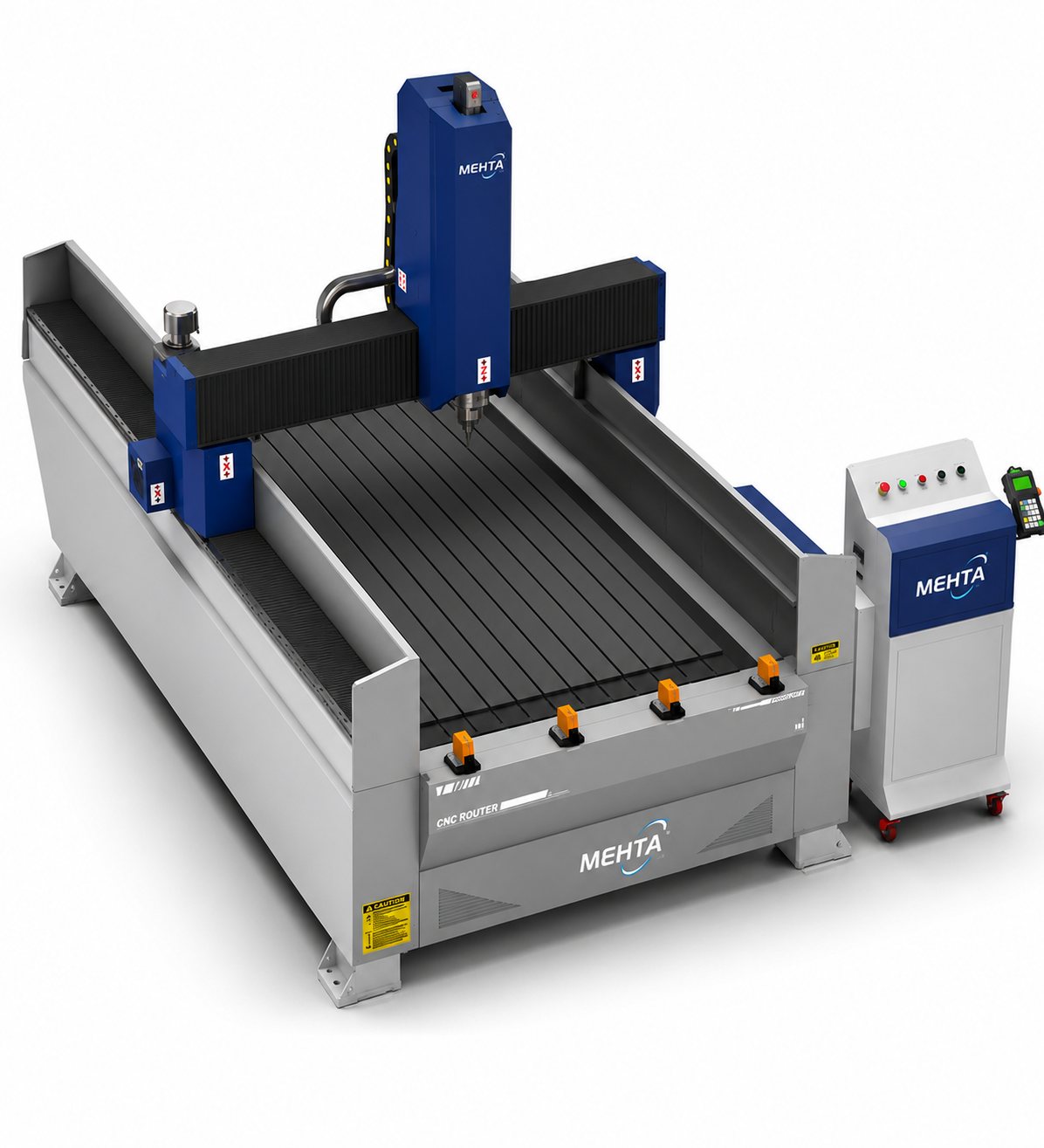
Large-format routing of plates, panels and composite sheet material.
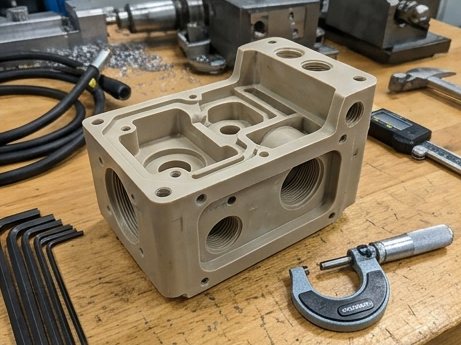 Multi-face machining
Machined from solid on 5 axes — sealing faces, bores and cable entries held in true position across setups.
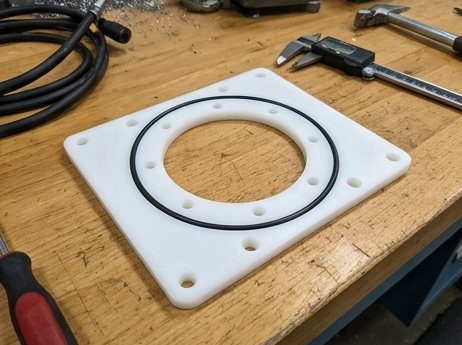 Flat & sealed
Plane-milled faces with controlled flatness and bolt patterns for reliable gasket and O-ring sealing.
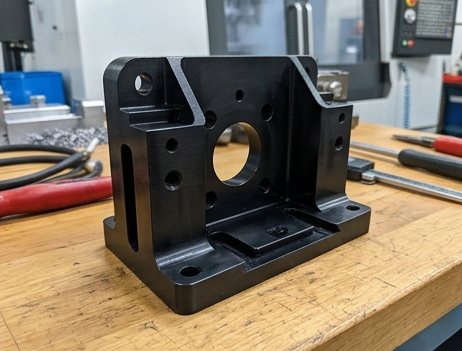 Structural
Load-carrying plates and angles with tight hole-position tolerance for repeatable assembly.
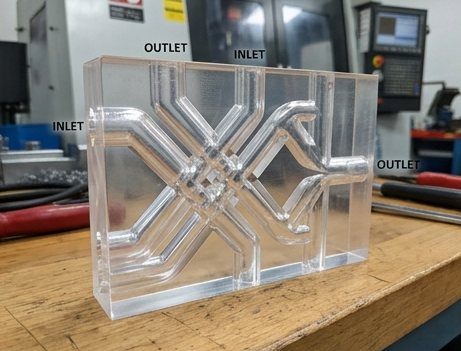 Internal channels
Intersecting bores and internal passages, deburred and cleaned; leak testing on request.
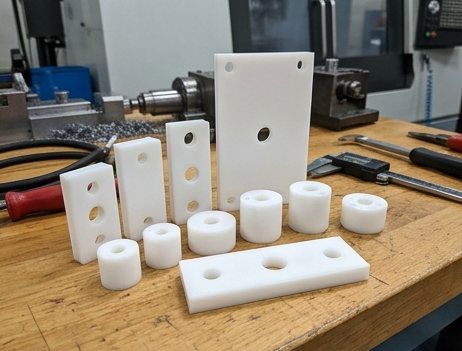 Electrical & thermal
Non-conductive spacers, barriers and isolators machined to size for electrical and thermal separation.
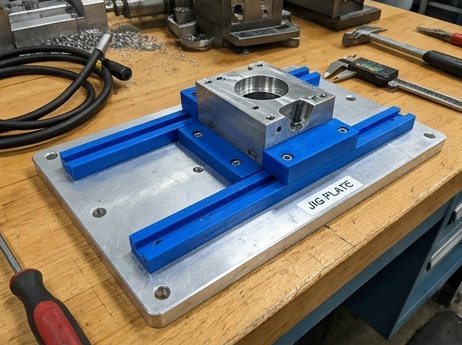 Tooling
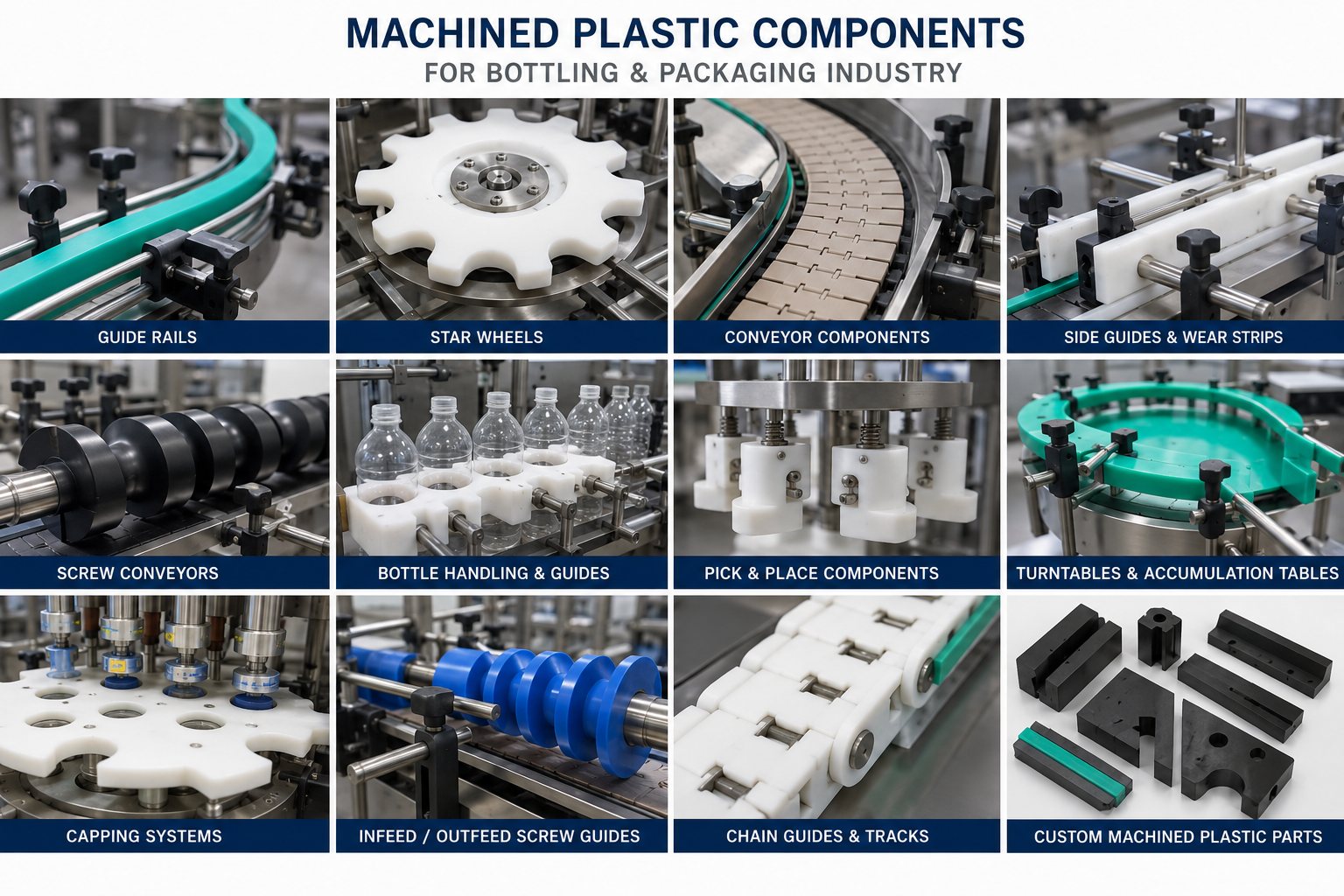
Non-marking guides, locators and wear strips that protect the product they handle.
In principle, all engineering plastics can be milled. The right choice depends on mechanical stress, temperature resistance, media contact, dimensional requirements and wear behaviour.
Precise, rotationally symmetrical components from engineering plastics — with tool geometry, cutting parameters and clamping tailored to each material.
CNC turning machines a rotating workpiece with specialised cutting tools to produce precise geometries and functional surfaces. Unlike metals, engineering plastics have lower thermal conductivity, higher thermal expansion and more elastic behaviour — so machining strategy, tool selection and heat management must be adapted to the material.
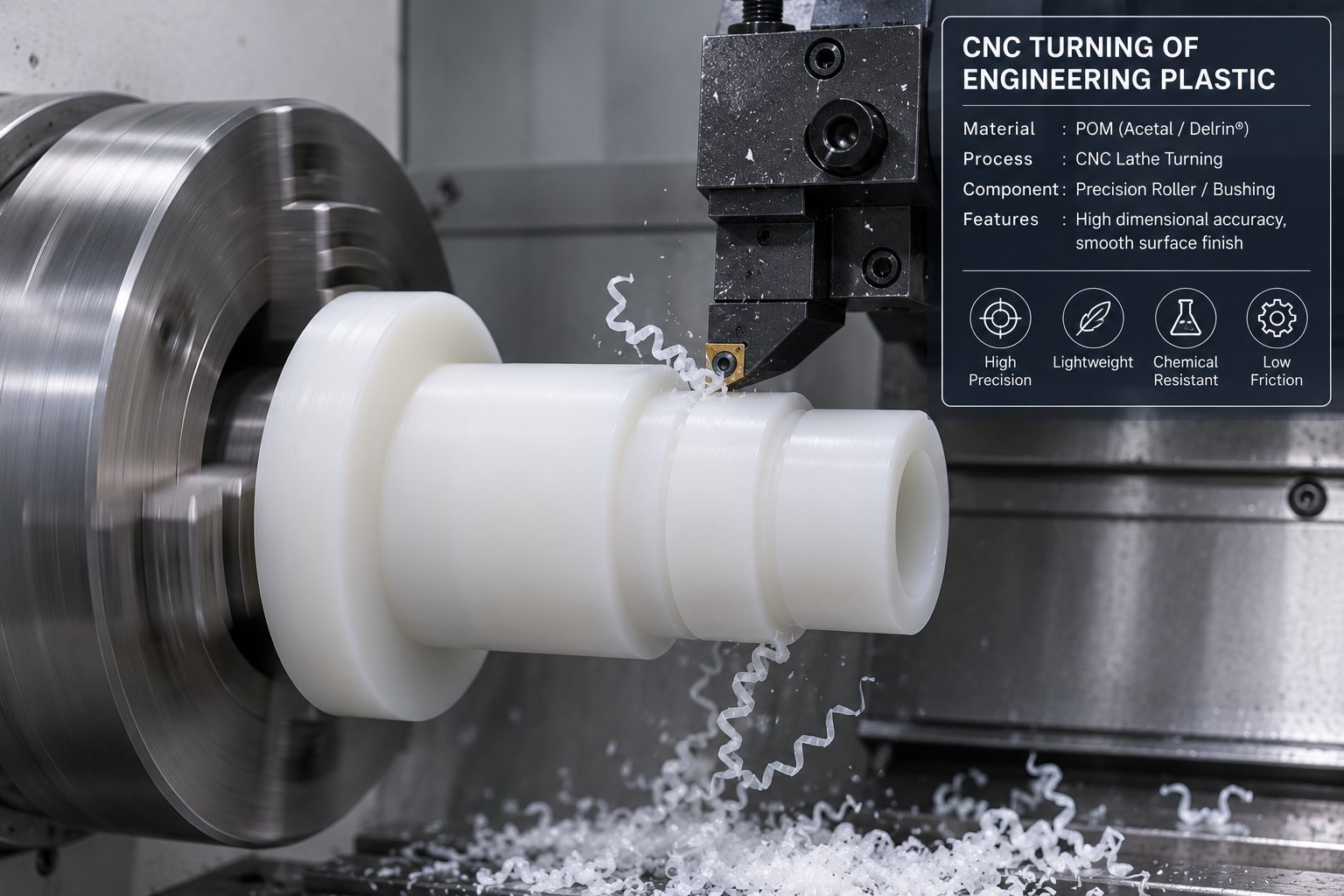
Positive tool geometries, polished cutting surfaces, generous chip clearance and low-vibration, stress-free clamping — plus controlled heat management to minimise thermally induced dimensional change.
Cylindrical and contour turning of outer surfaces.
Boring, reaming and precise internal fits.
Internal and external threads, burr-free and sharp-edged.
Sealing grooves, snap grooves, chamfers and facing.
On our CNC turn-mill centres, cross holes, milled surfaces, fits, contours and grooves are machined directly on the turned blank — improving accuracy, positional relationships of functional surfaces and process stability. Bar feeders and loading robots enable cost-effective series production of long, slender parts.
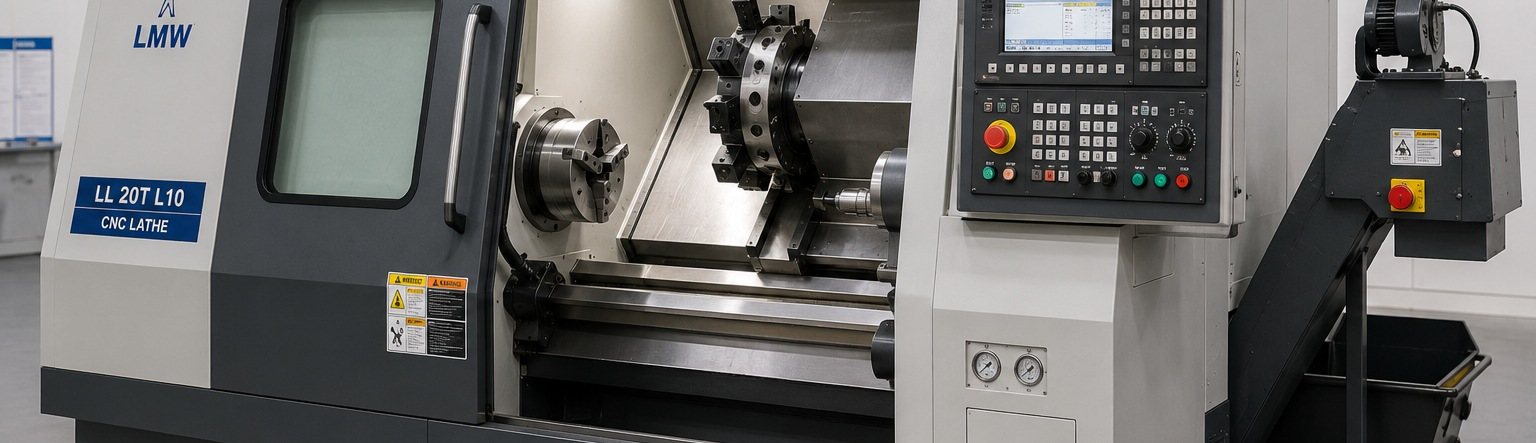
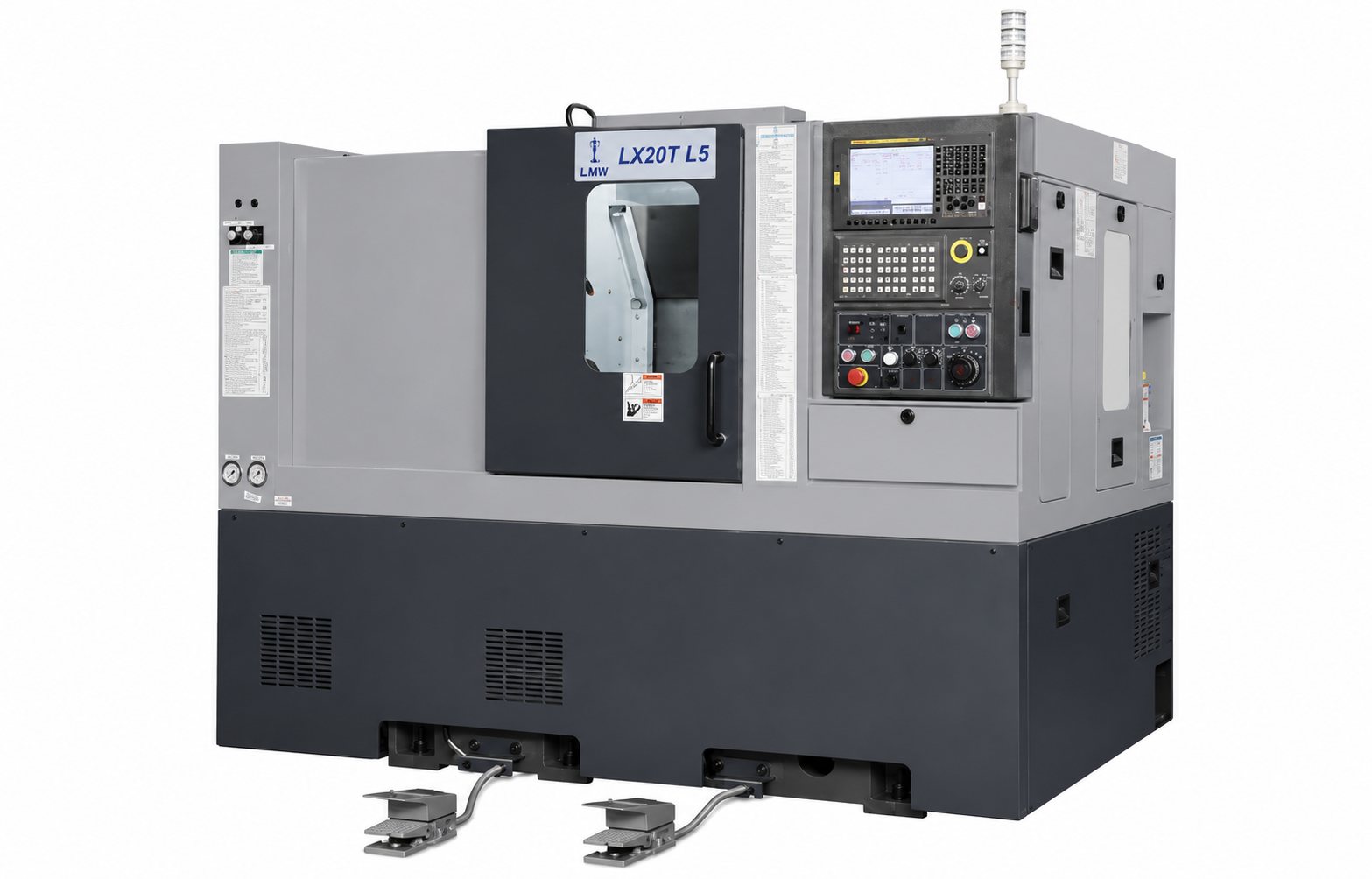
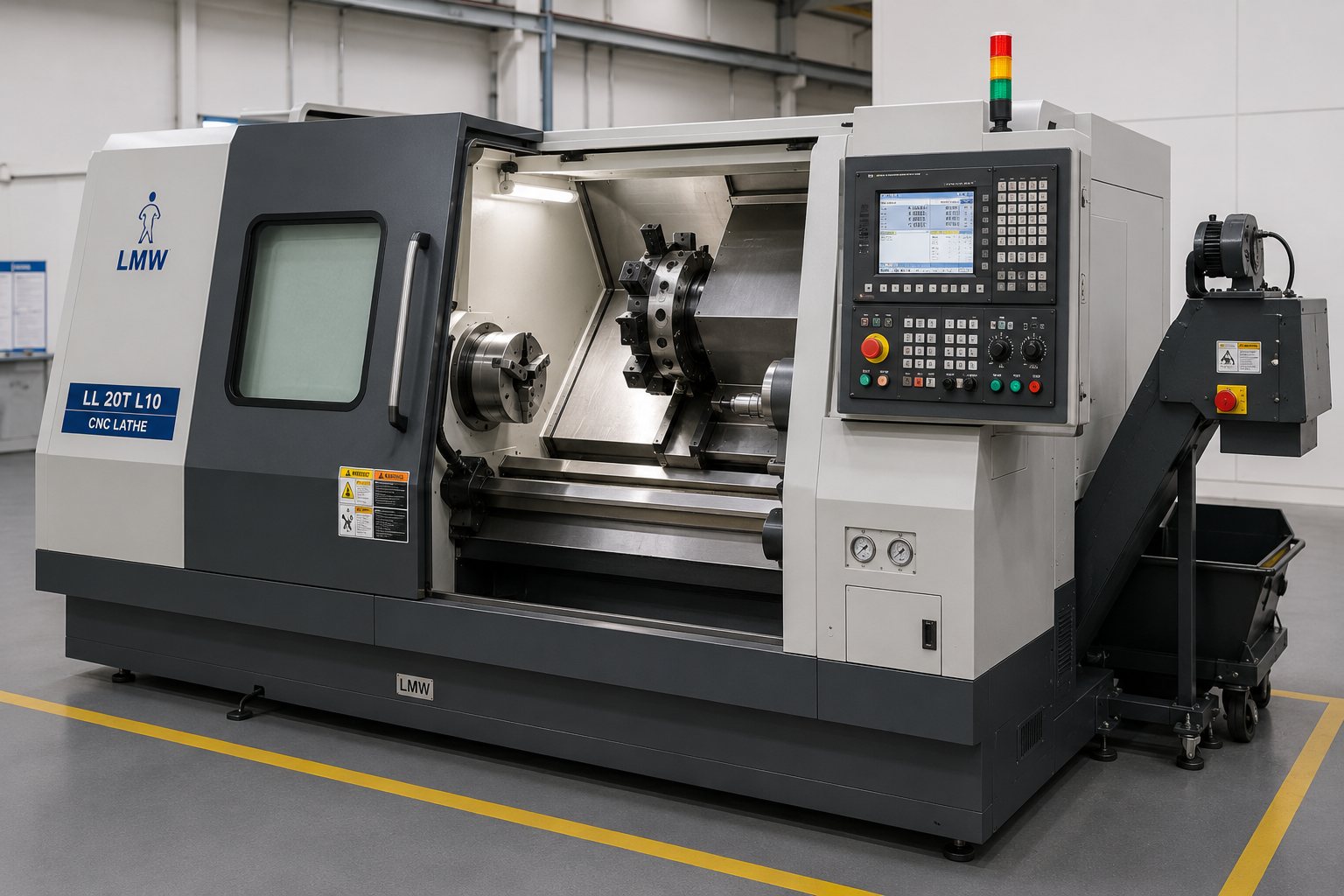
Production CNC lathe for repeatable precision turned parts.
Turning of engineering plastics with adapted tooling and heat management.
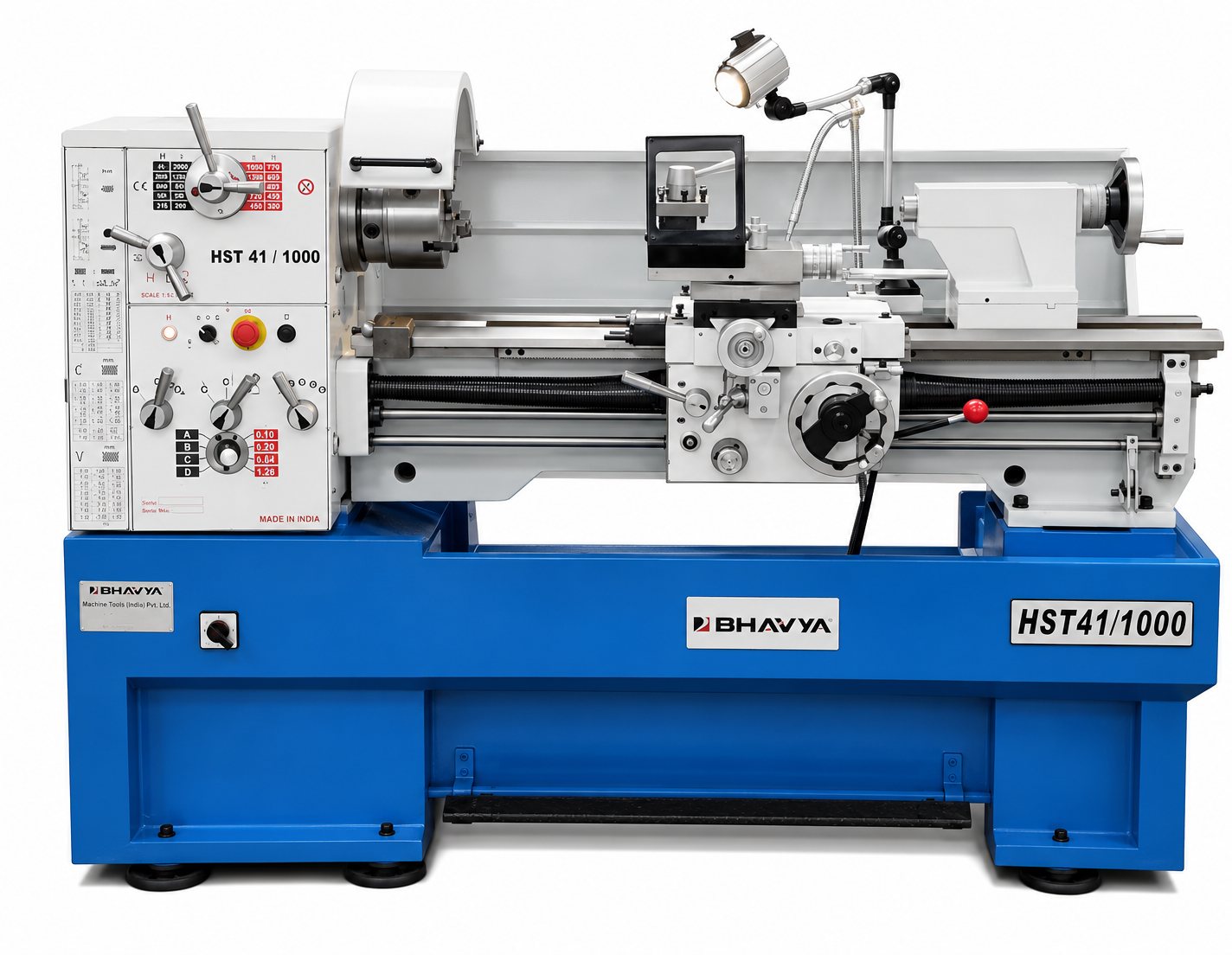
High-speed conventional lathe for single parts and pre-machining.
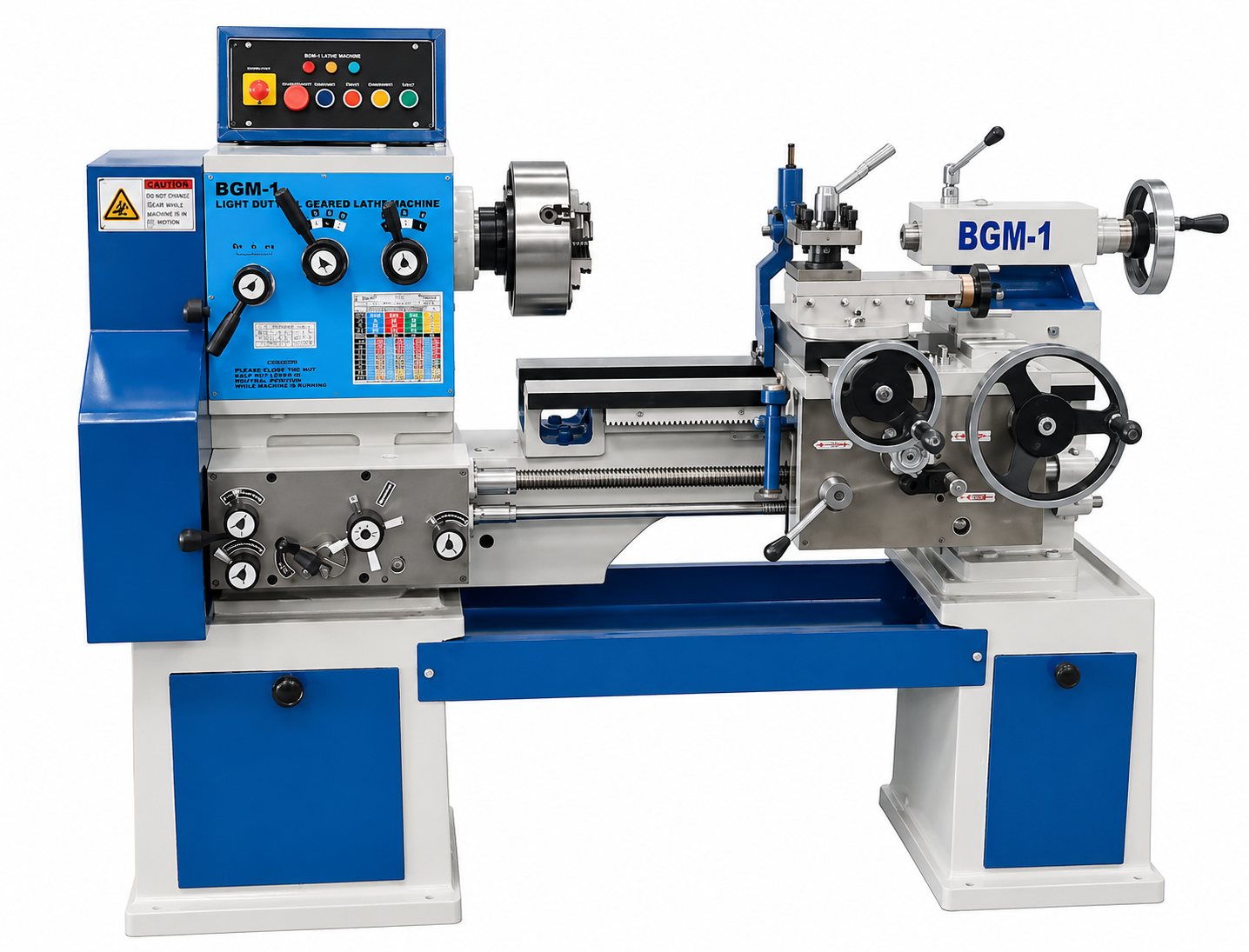
Light-duty lathe for smaller diameters and secondary operations.
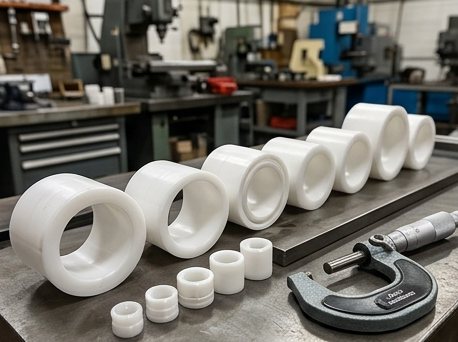
Good sliding properties and wear resistance in POM, PET and PEEK.
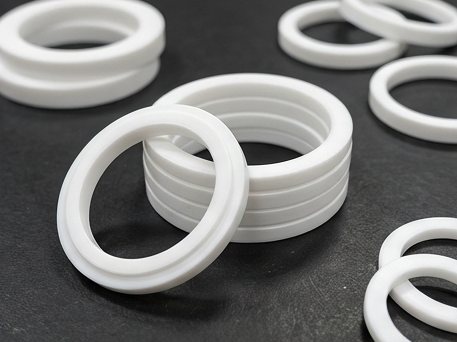
PTFE and PVDF rings for chemically aggressive media.
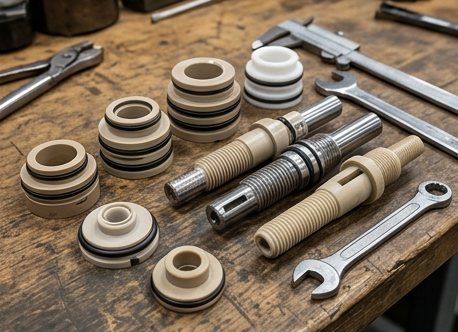
Precise seats and stems for fluid technology and process engineering.
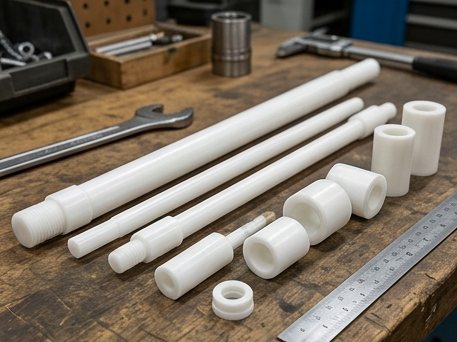
Dimensionally stable turned parts up to Ø 300 mm.
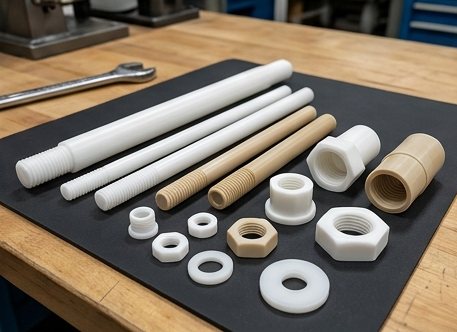
Insulating threaded elements for electrical and thermal separation.
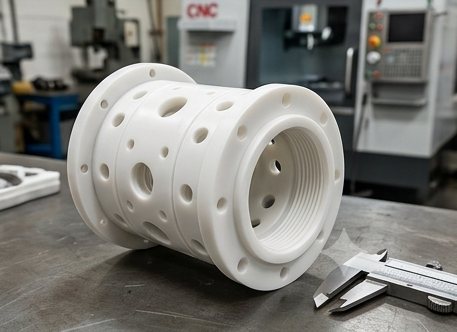
Functional housings with combined mill-turn features.
Fibre reinforced plastics, laminated densified wood and laminated pressboard — as a system provider we accompany you through the entire design and production process, from engineering through bonding, screwing, painting and mounting, up to complete tailoring.
Few processors bring fibre reinforced plastics, laminated densified wood and laminated pressboard together under one roof. That breadth lets us match the material to the application rather than to our machinery.
Glass- and carbon-fibre reinforced plastics from semi-finished products to machined finished parts, compression moulded parts and finished, painted, assembled sections.
Beech veneers bonded with curable synthetic resins under pressure and heat, to IEC 61061 — the classic transformer insulation material with outstanding mechanical strength.
High-performance insulation products for oil-filled power transformers — machined components, rings and platforms in HD-PH grade pressboard.
Our product range stretches from semi-finished products through machined finished parts to compression moulded parts and finished, painted and assembled sections. The manufacturing processes are as wide ranging as the products: moulding, filament winding and pultrusion, as well as machining of semi-finished products on modern CNC-controlled milling machines.
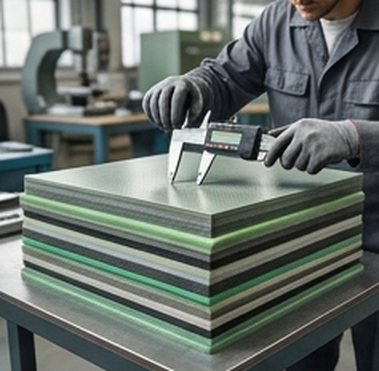
Flat semi-finished sheet in glass fibre reinforced grades — the starting point for machined insulation and structural components.
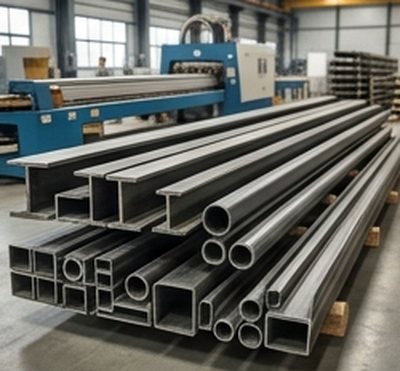
Pultruded FRP profiles — angles, channels, tubes and custom sections in continuous lengths for structural and insulating applications.
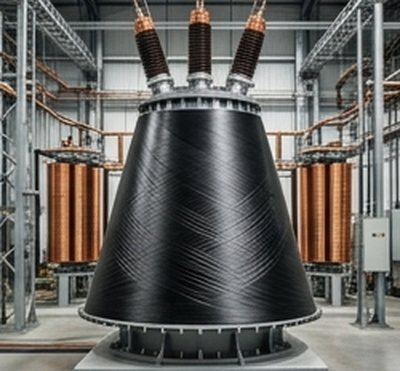
Filament-wound conical and cylindrical parts for transformer and electrical insulation, produced to large winding diameters.
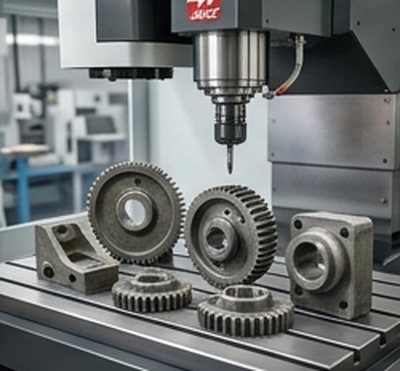
Finished parts machined from composite semi-finished products on CNC milling centres, to customer drawing and tolerance.
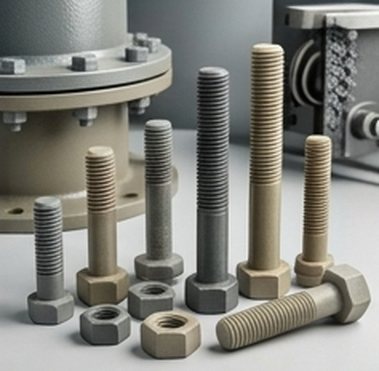
FRP bolts, nuts and threaded rods — non-conductive, corrosion-free fastening for electrical and chemically aggressive environments.
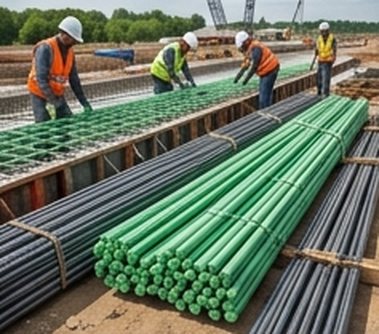
Fibre-reinforced composite reinforcing bars — corrosion-immune and non-magnetic alternatives to steel rebar in concrete construction.
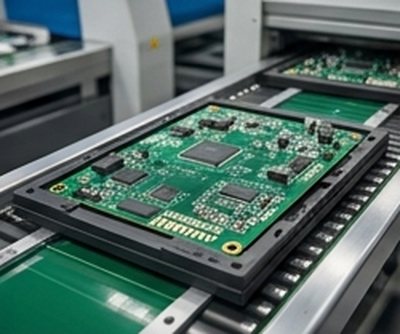
Dimensionally stable, heat-resistant carriers for selective and wave soldering of printed circuit boards.
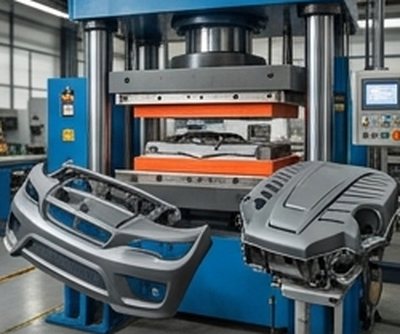
SMC & BMC moulded components and sheets in large formats, for series parts with complex three-dimensional geometry.
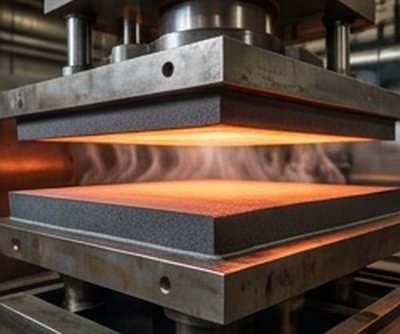
Heat-insulating fibre reinforced composites for press platens, moulding tools and high-temperature separation.
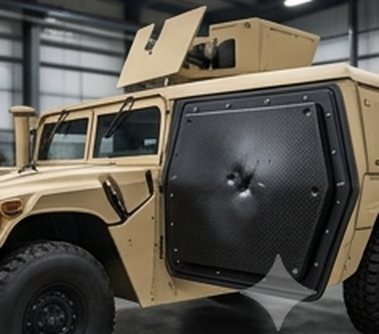
Bullet-resistant composite sheets and panels for defence, security and protective structure applications.
Four core manufacturing routes, selected to suit geometry, fibre architecture and volume.
Continuous profiles with unidirectional fibre for maximum stiffness along the length.
Wound cones, cylinders and tubes with fibre laid to the load path.
SMC/BMC parts and large-format sheets pressed to net or near-net shape.
Semi-finished composite machined to drawing on modern CNC milling centres.
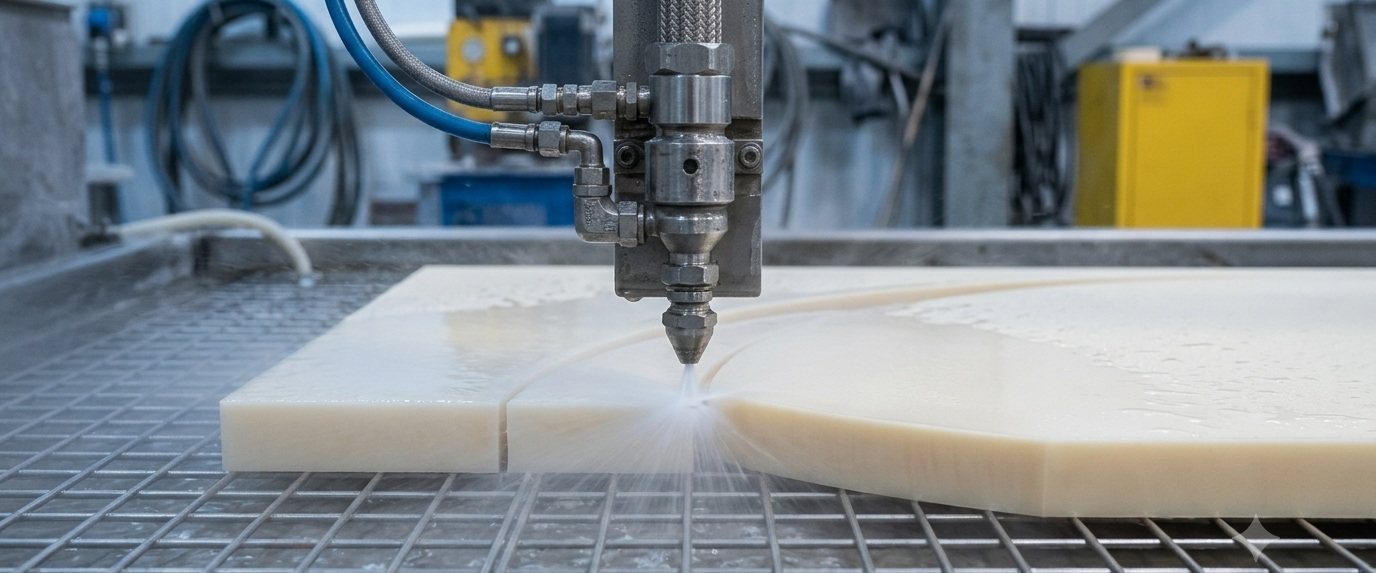
| GFRP / CFRP profile width | up to 1,600 mm |
| Profile height | up to 600 mm |
| Standard profile length | up to 12,000 mm |
| Wound cones & parts | up to Ø 3,500 mm |
| Compression moulded parts (3D) | up to 3,000 × 2,500 mm |
| Compression moulded sheets | up to 3,500 × 4,300 mm |
| Threaded rods | up to M52 × 12,000 mm |
| Greater dimensions | on request |
Dimensions indicate the product range envelope. Confirm exact capability for your part at enquiry stage.
Laminated densified wood is manufactured to IEC 61061 from veneers of common beech (Fagus sylvatica), bonded using curable synthetic resins under pressure and heat. The result combines high compressive and bending strength with excellent dielectric behaviour in transformer oil — which is why it remains the reference material for clamping and support structures inside power transformers.
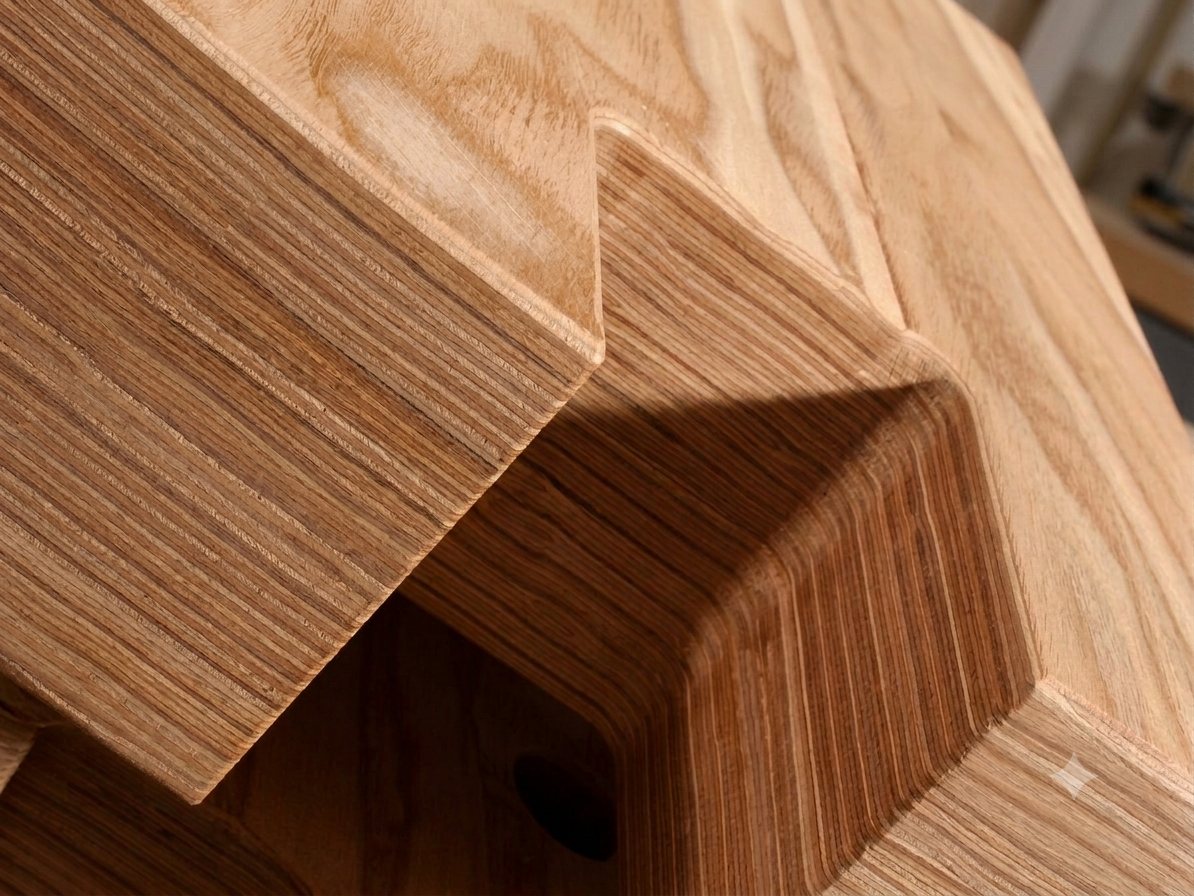
Pressboard components machined to drawing in large formats and a wide thickness range; thicker sections on request.
Large-diameter insulation rings and platform structures for winding support and clamping inside the transformer tank.
Pressboard fastening elements matched to the insulation system for fully non-metallic assemblies.
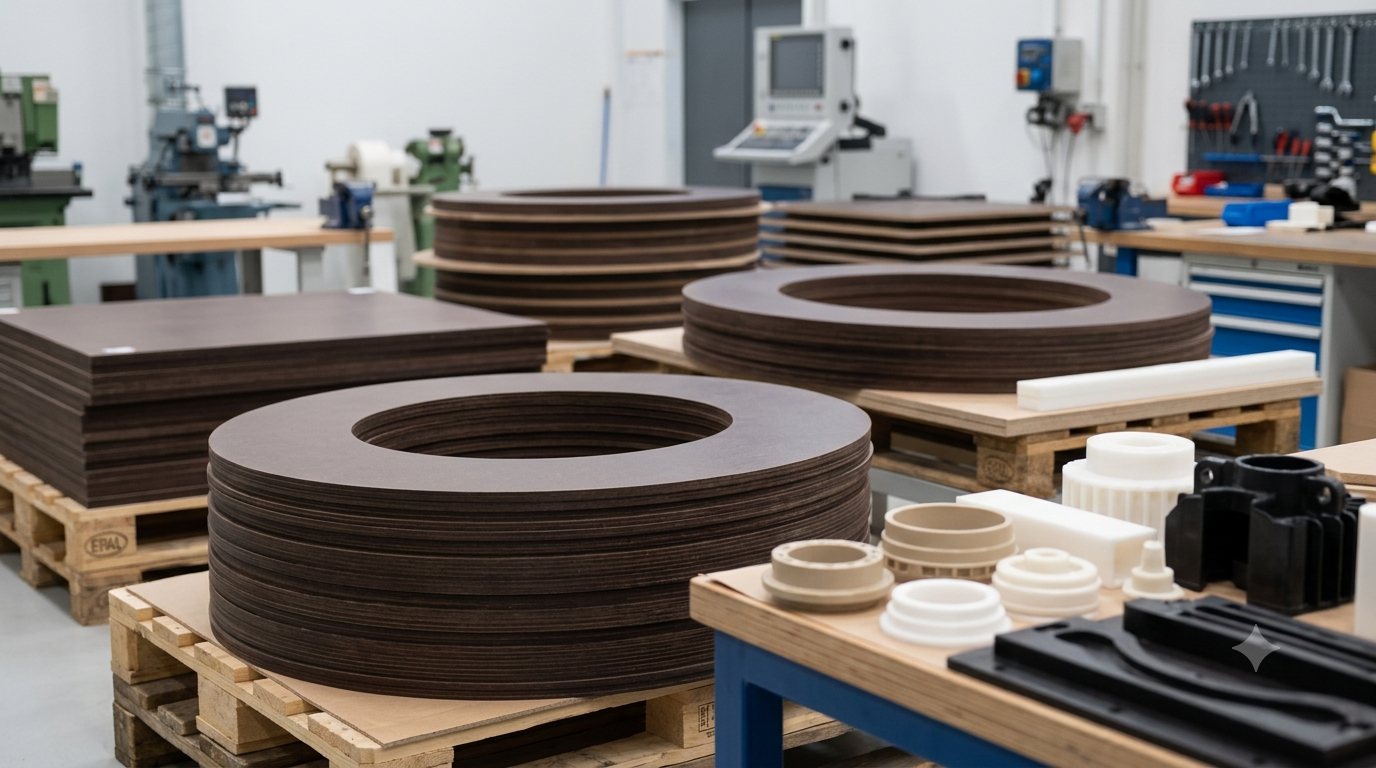
As a system provider for thermosetting plastics, we accompany you throughout the entire design and production process — and deliver components ready for installation.
Formulation developed for your application — mechanical requirements and fire behaviour, with economic feasibility in focus.
In-house CAD design of your component, with our own tool and fixture construction for high flexibility.
Continuous process monitoring and component property testing in our own material testing laboratory.
High-strength, rigid and elastic thick-bed adhesive joints; integrated plug and screw connections in mixed materials.
Protective and decorative coatings — from simple protection to high-quality A1 surfaces, including anti-graffiti protection.
Mounting of electrical components including cabling, plus mechanical installation — delivered installation-ready in protective packaging.
Engineering, production, painting, bonding, assembly and tailoring of complete interior and structural sections.
Insulation rings, clamping structures, platforms and non-conductive fasteners.
Composite rebar, structural profiles and corrosion-immune walkway and support structures.
Ballistic panels and protective structures in hybrid composite laminates.
Lightweight structural and interior components in carbon and glass fibre laminates.
Structural composite components for wind and solar installations.
Corrosion-resistant profiles, gratings and tank structures for aggressive media.
PCB solder pallets and heat-resistant carriers for assembly lines.
From formulation and CAD design through machining, bonding and painting to installation-ready delivery.
The right material is the key factor for the design and service life of your component. We machine 25+ polymers — and help you choose the right one.
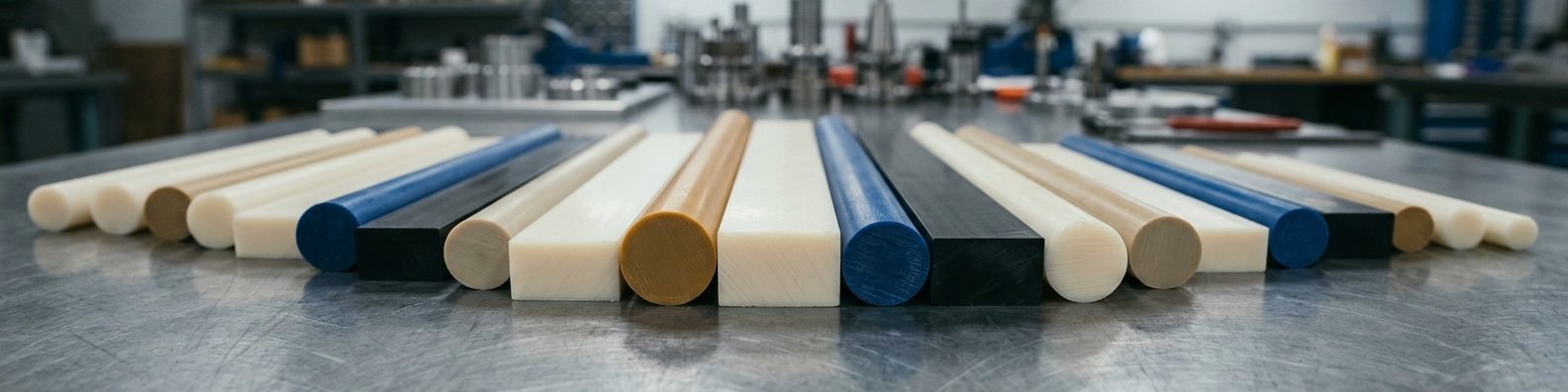
Hard, stiff plastics such as PEEK, PPS and PEI form few burrs and machine with high precision. POM machines well and dimensionally accurately. Tougher, softer materials — PE, PA and especially PTFE — are prone to burr formation and warping and require a tailored process. Fibre-reinforced grades are abrasive and demand adapted tooling: the higher the reinforcement content, the more complex the machining.
| Service temp. | 260 °C |
| Machinability | Excellent |
| Strengths | Strength · chemical resistance |
| Service temp. | 100 °C |
| Machinability | Excellent |
| Strengths | Dimensional stability · sliding |
| Service temp. | 230 °C |
| Machinability | Very good |
| Strengths | Chemical & dimensional stability |
| Service temp. | 170 °C |
| Machinability | Very good |
| Strengths | Stiffness · flame retardance |
| Service temp. | 150–180 °C |
| Machinability | Very good |
| Strengths | Sterilisation resistance |
| Service temp. | 140 °C |
| Machinability | Good |
| Strengths | Chemical & UV resistance |
| Service temp. | 100 °C |
| Machinability | Moderate — tough |
| Strengths | Toughness · abrasion resistance |
| Service temp. | 80–100 °C |
| Machinability | Moderate — burr-prone |
| Strengths | Chemical resistance · low cost |
| Service temp. | 260 °C |
| Machinability | Demanding — soft |
| Strengths | Ultimate chemical resistance |
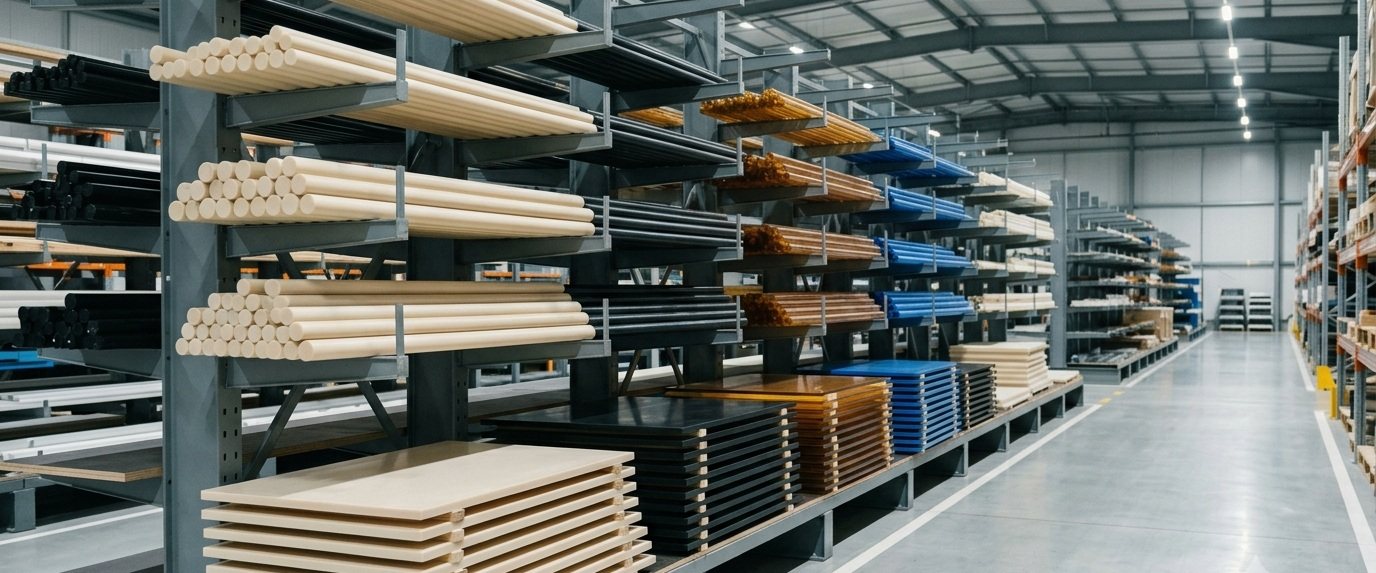
We machine material produced by qualified suppliers — and, on request, your own free-issued thermoplastic stock. Fibre-reinforced (CF/GF), ESD, food-contact and medical grades available.
From feasibility study to ready-to-use component — functional prototypes machined directly from your CAD model, in the same material as your series part.
As soon as your CAD design is mature and demands for precision and functionality increase, a physical prototype is needed to validate the design under real conditions. CNC prototypes deliver high dimensional accuracy and complex geometries directly from the digital model — with no tools or moulds, so changes are integrated quickly and economically.
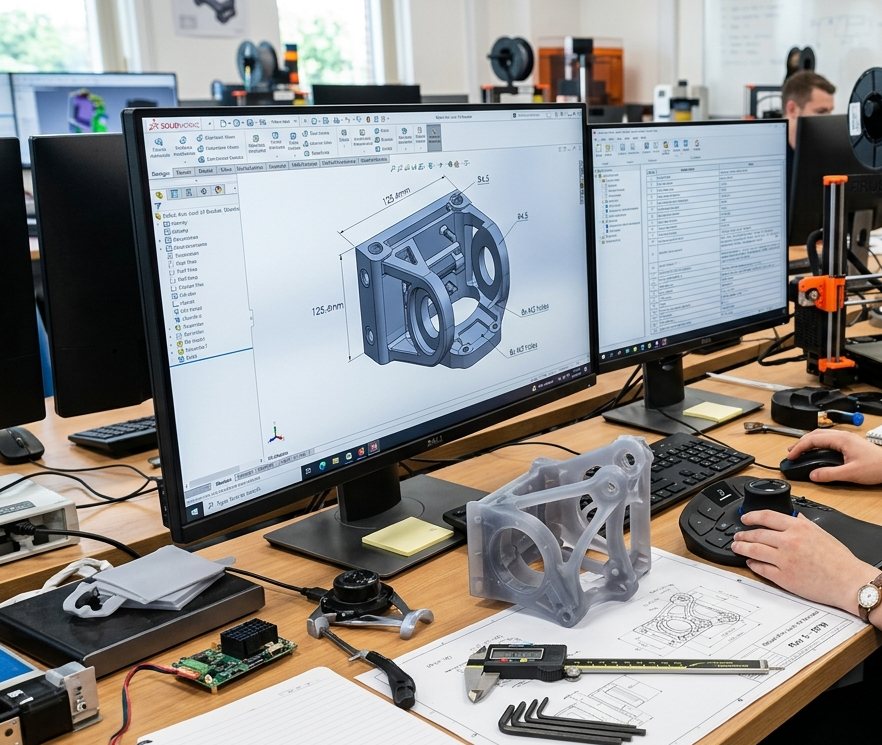
We review CAD data, tolerances and application, and advise on manufacturable design.
25+ thermoplastics and 100+ modifications in plate, rod and tube — in stock.
Prototype milling, turning and drilling with minimal tolerances on modern centres.
Measurement report on request — prototype ready for testing and validation.
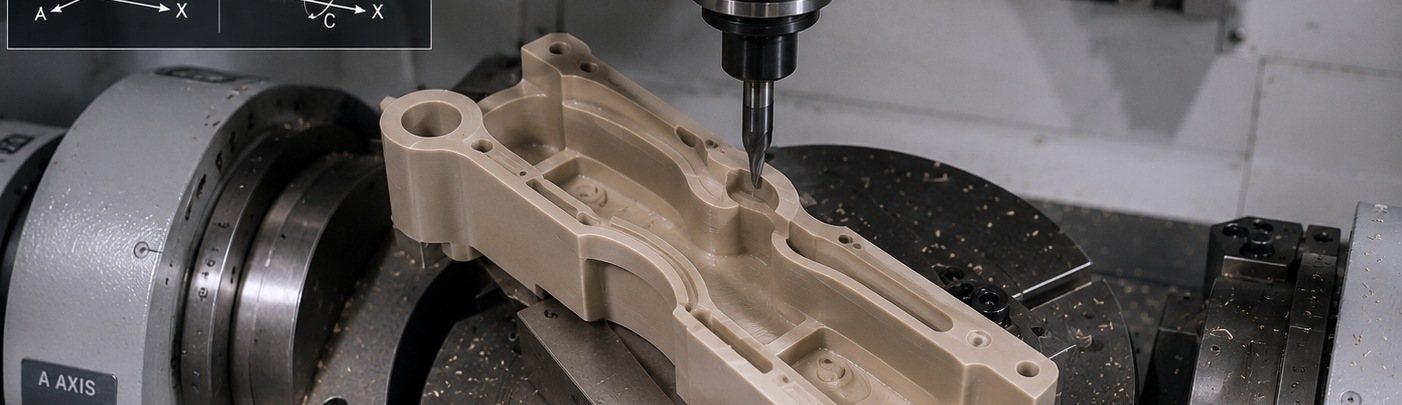
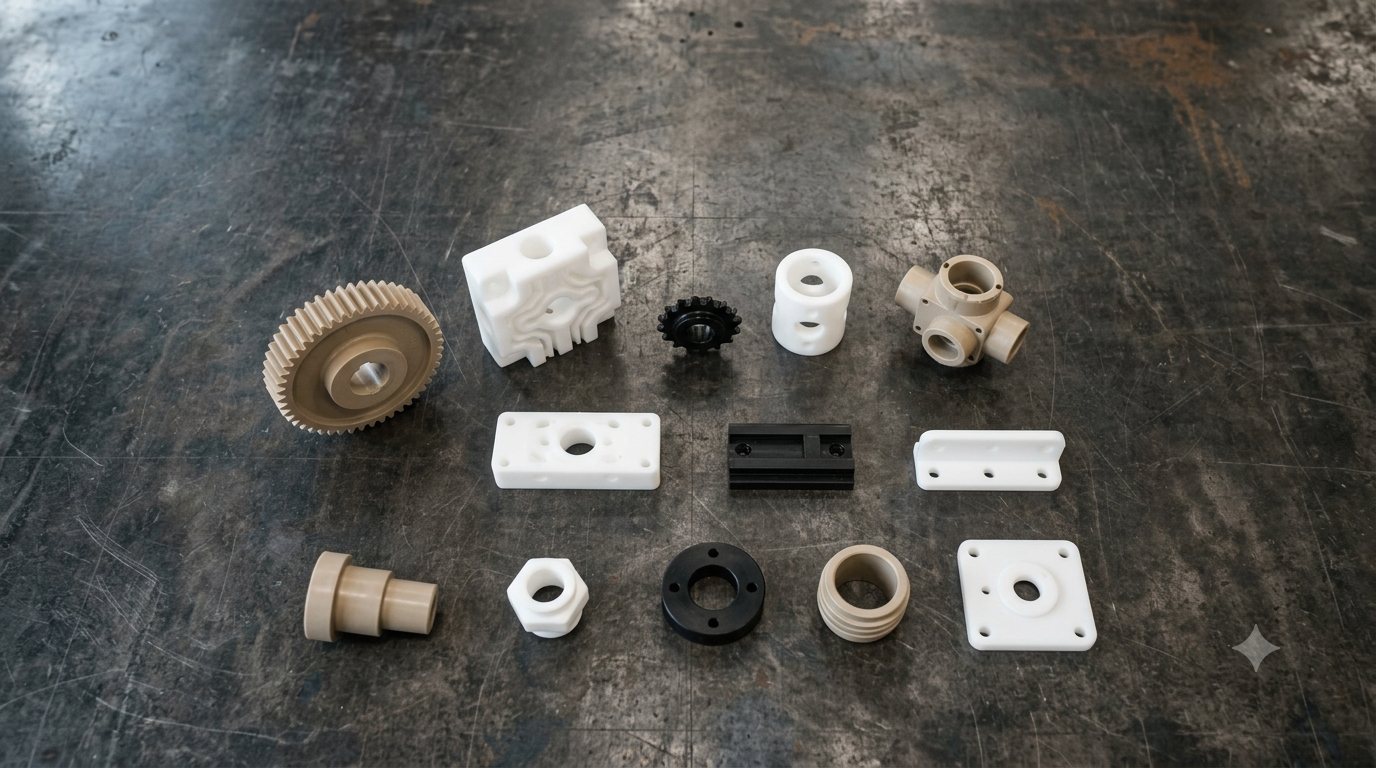
PEEK offers extreme temperature and chemical resistance; POM excels in machinability and dimensional stability; PA combines toughness with abrasion resistance. Prototyping in the real engineering material means your test results carry directly into series production.
Finished components, assemblies and complete solution strategies — realised for the most demanding industries.
Three sectors where we combine machining of engineering plastics with thermoplastic composite expertise.
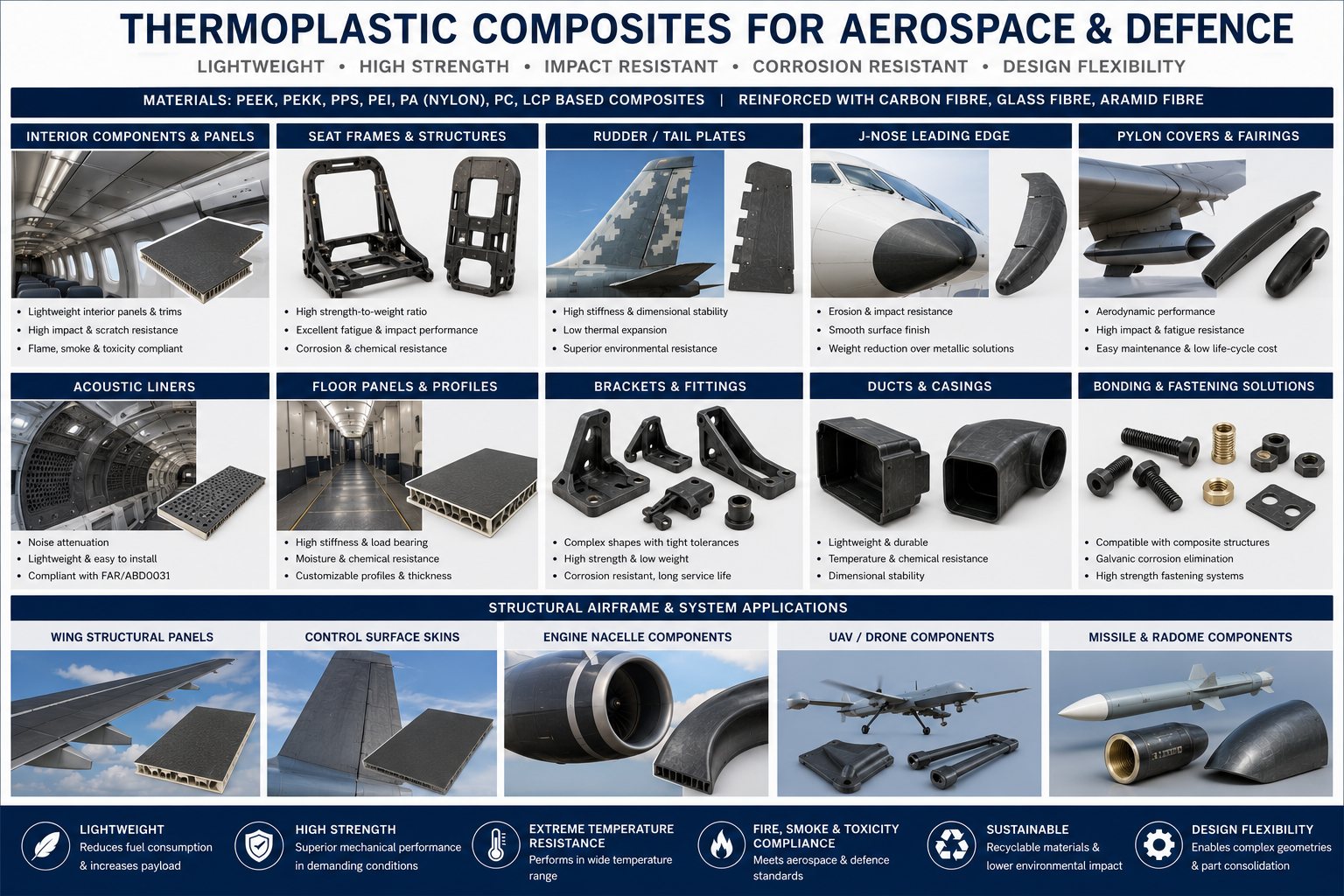
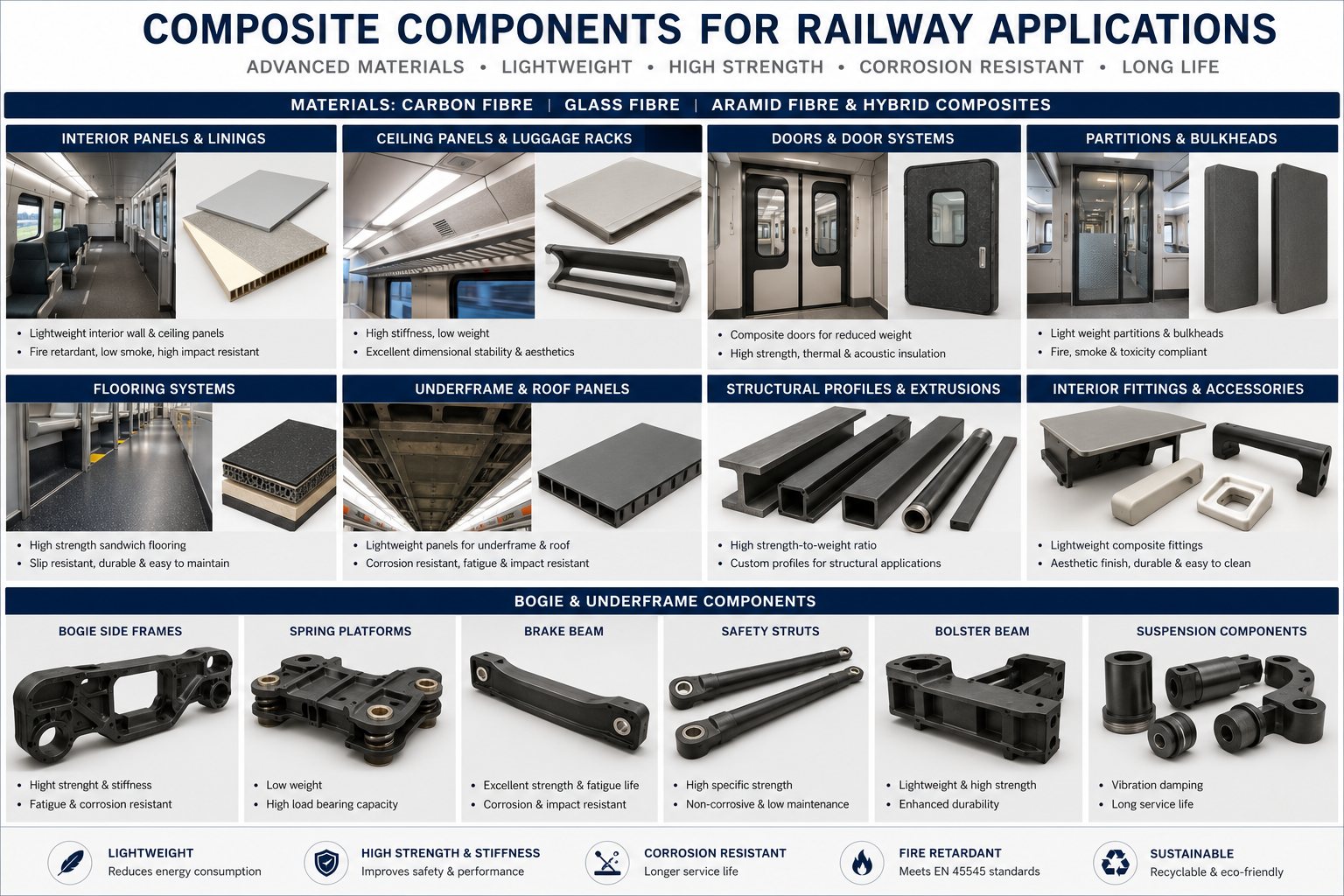
Talk to our engineers about materials, geometry and production-oriented design.
Send CAD data, drawings, material specification, tolerances and quantities — the more precise the input, the faster and more accurate our offer.
Dich Tech Präzision Composites (DTPC) Pvt Ltd
86, Mansarover Industrial Estate,
Panchali Khurd, Uttar Pradesh – 250002
India
CIN: U28299UP2025PTC238730
Info@dtpcomposites.com
+91-976-234-8892
Mon–Sat, 9:00–18:00 IST
Tell us about the part — we reply with a material recommendation and quotation.